

Dog costs • Sustainable coverage

Build a reliable insurance cost estimate for your dog

A quote is only as useful as the dog profile behind it. Resolve uncertain details and keep revised offers traceable before setting the budget.

Owner outdoors holding a dog in a snowy landscape
✓ Policy-first ✓ Independent ✓ Useful checks
Direct answer
Your dog’s insurance cost depends on its age, breed, home location and chosen benefits. For context, NAPHIA reports a US dog accident-and-illness average of $836 annually for the 2025 reporting period, about $70 a month as an annual equivalent. That is not a current quote. The useful price is the actual premium for protection you can keep paying for.
Cost & value

Some price inputs describe your dog; others are choices

Input What you can do honestly What to avoid
Age, breed and residence Correct errors and use the best supported information Entering a younger dog or another ZIP to obtain a lower figure
Medical coverage Decide which risks you need transferred Calling accident-only equivalent to accident-and-illness
Deductible and reimbursement Choose the share you can retain Treating a larger owner share as free savings
Optional benefits Price only the options you want Assuming the base quote includes every displayed feature
Payment arrangement Compare the offered total and cash timing Assuming an annual equivalent is your monthly bill

The NAIC identifies pet characteristics and chosen coverage as price factors. A quote is the result of those inputs, not a universal price for all dogs. Keep a copy of the profile with the offer so an unexpected change can be traced.
Quotes

When the dog’s age or breed is an estimate

For an adopted dog, the paperwork may contain an approximate birth date or a broad breed description. Start with the records you have and identify which entries are estimates. Ask the insurer how to enter uncertain information instead of selecting the answer that produces the smallest price.

If the application’s breed choices do not fit the dog, ask which available category it expects you to use. Do not treat a photograph, a casual guess or another dog’s registration as proof of pedigree. A veterinary or adoption record can help explain what is known without making the history more precise than it really is.

Keep the insurer’s instruction with the quote. You want to know both the cost based on the information available and whether any later clarification would change the offer. Do not describe an uncertain-input estimate as a guaranteed premium.

Quotes

A correction is a new quote observation

Consider a fictional adopter who obtains an initial estimate using an approximate age from a shelter record. A later veterinary record clarifies the age. The adopter should report the correction, ask for a revised offer and save both versions with the reason for the change. The example asserts no premium direction or amount.

Keep the benefit selections fixed while the insurer corrects the profile, if that comparison is available. If the correction also changes the available benefits or eligibility, record that outcome explicitly. You cannot attribute a price difference solely to age when the protection changed at the same time.

Next, if you deliberately choose a different deductible or option, save another version. Label this as a coverage-choice change rather than a correction. A short version chain prevents a cheap early estimate from lingering in the household budget after the underlying assumptions have been replaced.

Cost & value

Turn the verified offer into a cost you can plan around

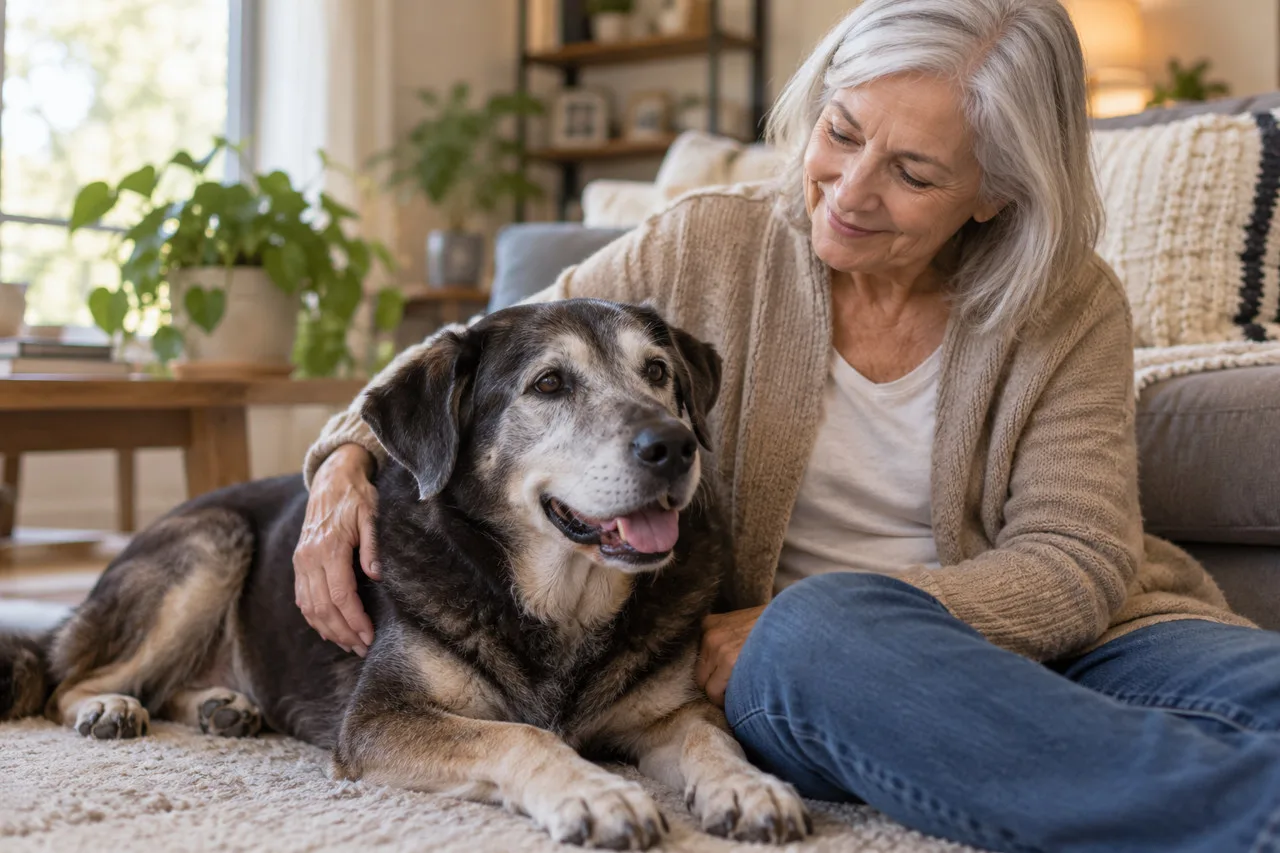
Owner relaxing beside a dog
A sustainable plan needs room for future premium changes.

After the profile is settled, record the complete policy-period premium and actual payment schedule. Keep selected extras visible. If the insurer provides only a starting price or an incomplete estimate, ask what remains to be confirmed before it becomes the payable offer.

For each version, retain five entries: the dog details used, the selected protection, the premium, the offer date and the reason it replaced the earlier version. Do not mix the lowest price from one version with the broadest protection from another.

Keep a separate care reserve for the deductible, your share and excluded expenses, as well as any upfront clinic payment. That reserve is not an additional fixed insurance fee; it is preparation for costs the premium does not eliminate. At renewal, use the issued contract as your baseline rather than the first shopping estimate.

Quotes

What to do when the estimate is still uncertain

Ask the insurer to identify the unresolved input and how it affects the offer. A written “we need this record” answer is more useful than collecting more prices with inconsistent information. Keep any approximate detail clearly labeled until it is resolved.

You can still compare documented offers, but do not call them identical if one uses a materially different dog profile or benefit design. No breed-specific or age-specific quotes were collected for this guide. The national benchmark cannot fill a missing field in your own application.

A useful cost estimate ends with the actual terms and price you could accept, together with any remaining uncertainty. It should not require pretending to know the dog’s exact history or treating an early promotional screen as the final bill.

Evidence

Sources and policy context

These public references support the consumer or veterinary context. Named insurer details were checked in official product materials; the policy offered for your pet and state determines the actual terms.

Next step

Compare Current Pet Insurance Rates

Check current options for your pet and location, then compare the policy details, exclusions, costs, and eligibility before choosing.

Compare the policy before you choose Check the actual offer, exclusions and out-of-pocket terms.
See Rate Options